An Honest Liar' Movie Review
A documentary about James "The Amazing" Randi, the carnival escape artist who spent the second half of his life dismantling psychics and faith healers, and the very personal deception he never saw coming.
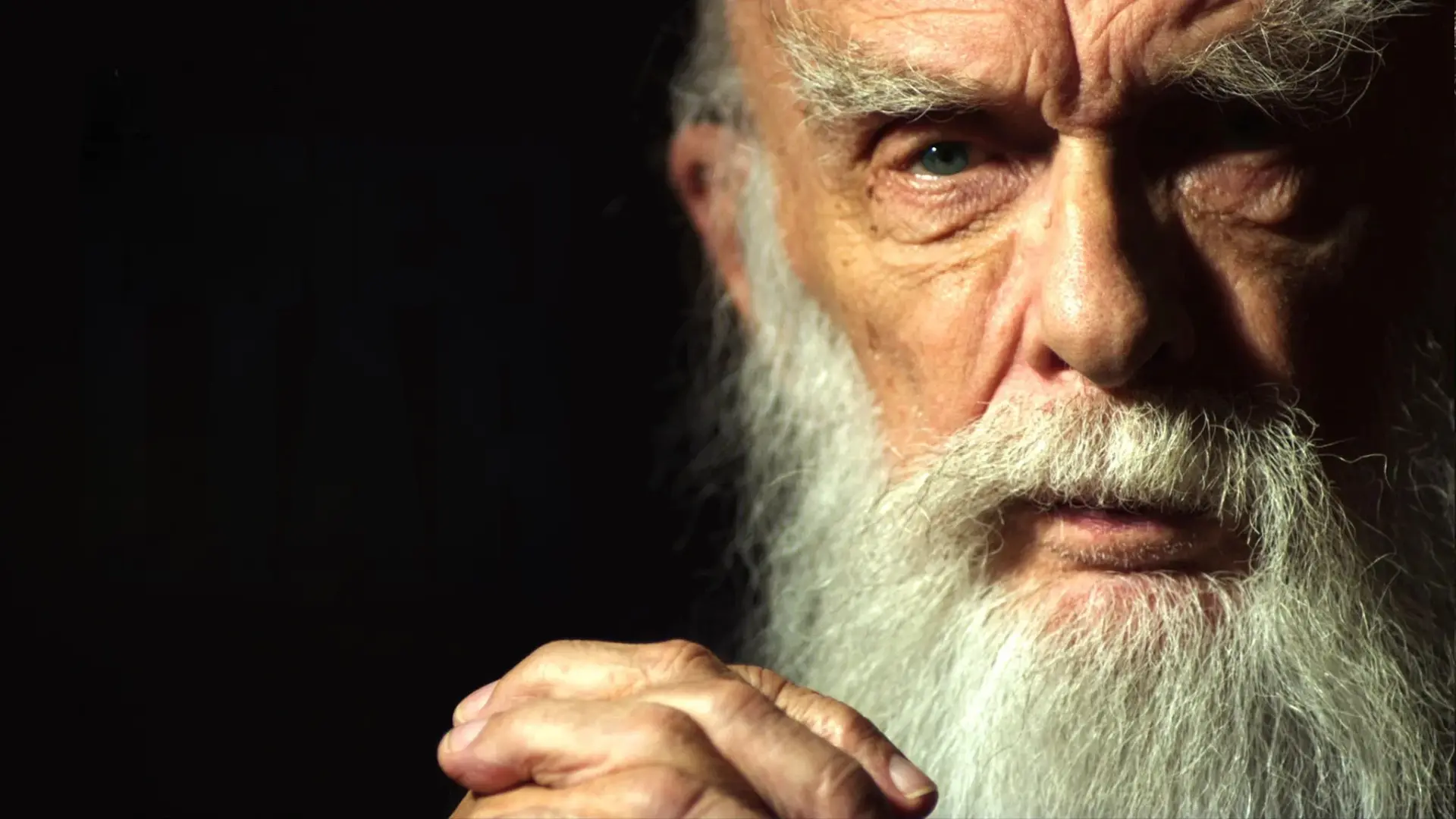
There's a moment near the end of "An Honest Liar" where the camera just sits on James Randi's face. He's in his eighties. He's just learned something devastating about the man he's loved for twenty-five years. And the documentary, which spent the previous ninety minutes celebrating his almost supernatural ability to see through other people's lies, suddenly has nowhere to go.
That moment is why this 2014 film by Tyler Measom and Justin Weinstein sticks with you. (Stay through the credits, by the way, for the perfect closing wink: "No spoons were harmed in the making of this film.")
The Setup Reads Like Fiction
Randi was born Randall James Hamilton Zwinge in Toronto in 1928. He learned magic from library books while stuck in a body cast after a bicycle accident, dropped out of school at 17, and joined a traveling carnival as a conjurer. He went on to escape from straitjackets while hanging upside-down over Niagara Falls. He decapitated Alice Cooper on stage every night during the 1973 Billion Dollar Babies tour, having designed the guillotine himself. He was a regular guest on Johnny Carson's couch.
And then somewhere in the seventies, he stopped doing magic for fun and started using it as a weapon. His new target was the entire industry of psychics, faith healers, and (his favorite term) "woo-woo" merchants making money off other people's grief.
The Greatest Hits Are Genuinely Thrilling
The film's middle stretch is essentially Randi's debunking highlight reel, and it's a blast.
The 1973 Johnny Carson takedown of Uri Geller is the centerpiece. Geller, the spoon-bending Israeli "psychic," had charmed half of America. Randi quietly tipped off Carson's producers about how Geller's tricks worked, and they switched out his props for tamper-proof ones. What plays out on national television afterward is one of the most uncomfortable clips you will ever watch: Geller, sweating, stalling, telling Carson he just isn't feeling "strong" tonight. The film shows the whole thing.
Then there's the 1986 unmasking of televangelist Peter Popoff, who claimed God was whispering audience members' names, addresses, and afflictions into his ear during faith-healing services. Randi figured out Popoff was getting fed the info by his wife through a hidden earpiece, picked up her radio frequency, and recorded the whole transmission. The audio of her muttering instructions before listing some poor woman's medical condition might be the funniest, saddest stretch of documentary footage you'll see all year.
A Cast That Reads Like A Skeptic's Hall Of Fame
This is the kind of doc where you keep going "oh, him too?" Penn Jillette and Teller show up because of course they do, both of them clearly worshipful of Randi. Adam Savage from "MythBusters" brings his particular flavor of nerd enthusiasm. Bill Nye, Michael Shermer, and British psychologist Richard Wiseman fill out the skeptic bench. Alice Cooper is in there because Randi designed his stage show in '73. (Yes, that Alice Cooper.)
The most surprising get is Uri Geller himself, who sat for an on-camera interview about the man who built half a career destroying his. Their dynamic is fascinating, two old men who clearly still hate each other but have arrived at a kind of weary truce. Director Justin Weinstein has compared them to a superhero and his nemesis, and watching them, that's exactly how it reads.
The Twist That Rewrote The Movie
About two-thirds of the way through production, Measom and Weinstein had what they thought was their movie. And then their subject got hit with a real-world plot twist that no one, including Randi himself, saw coming.
Without spoiling it (the film's reveal is much better than any synopsis), Randi's longtime partner José Alvarez was discovered to have been living under someone else's identity for decades. The man Randi had spent twenty-five years with had been performing a deception of his own, in plain sight, in their shared home. The filmmakers had to extend their shoot. They had to follow Randi through a private nightmare while still trying to make a film about deception as a public good. The seams show, a little. But the rawness is the point.
Understand how culture and cinema are changing society.
Where It Falls Short
The doc isn't perfect. The shift from career retrospective to personal drama is a huge tonal swing, and not everyone will buy it. Some viewers feel the personal-life material rushes through what could honestly have been its own film. Others feel the third act doesn't quite know what to make of its subject, who turns out to be more emotionally guarded than the breezy first half led you to expect.
There's also a sharper version of this movie that asks harder questions about Randi's own methods. Was he ever cruel? Did the ends always justify the means? The film gestures at these questions and then tiptoes past them. If you came in already a fan, you'll feel served. If you came in skeptical of skeptics, you might want more pushback than the film gives you.
Behind The Camera
Most of the Randi interviews were filmed at the Magic Castle in Hollywood, the famously private magicians-only club housed in a Victorian mansion (yes, with an actual secret bookcase door). The filmmakers also shot some interviews in a Houston warehouse that Terrence Malick used as Sean Penn's office in "The Tree of Life," which is the kind of trivia that adds nothing and still somehow feels right.
The film was crowdfunded on Kickstarter in early 2013 and raised nearly $247,000 from over 3,000 backers, blowing past its $148,000 goal by more than 60%. It premiered at the 2014 Tribeca Film Festival, won the Audience Award for Best Feature at AFI Docs that year, and currently sits at 98% on Rotten Tomatoes.
What To Watch For
Watch the way Randi talks about magic versus the way he talks about fraud. There's a moral line he draws so cleanly that it almost feels like its own kind of trick. Watch his hands when he tells stories, he's still performing, even when he's just sitting in a chair. And really watch the final twenty minutes, slowly. You'll see a man who has spent his entire life proving that no one is too smart to be deceived, finally testing that thesis on himself.
It's the film's quietest stretch and its hardest watch. It's also the part you'll remember.